


Intel Analysis: South Sudan Crisis: How and why did we get here?
- Karamoja Trumpet News Team

- Mar 25, 2025
- 14 min read

Point of Note: This report was compiled based on by the Africa Leadership Institute (Peace and Conflict Transformation Department). A Pan-African, Independent, Public Policy Think Tank that has advised Governments in East Africa on Governance, Peace, and Development since 2004. Its staff have experience in the region dating back to the 1980s. During the war for independence, the referendum and even after independence it has maintained close relationships with the SPLM (IG-IO) and has from time to time provided advisory support. It has taken an honest, fair and balanced look at the crisis while taking into consideration historical, socio-political, and economic nuances.
1.0. Introduction
The past few weeks have seen an explosion of violence that has rocked South Sudan. What began as clashes between tribal militias and the state in Nasir County of Upper Nile State in South Sudan has led to a catastrophic chain of events, pitting the two main protagonists in South Sudan, President Salva Kiir and his Vice President Riek Machar against one another.
This eerily echoes the 2013 and 2017 bloody civil wars in which over 400,000 (four hundred thousand) human beings lost their lives with scores injured and millions displaced.
The US, UK, EU, and a plethora of nations have expressed their concern. The Ugandan Parliament has approved the deployment of Ugandan Special Forces to South Sudan. Since March 11th the Ugandan Army has been deployed in South Sudan, however there have always been claims that Uganda’s Special forces have been in the country long before at President Salva Kiir’s Personal Base in Luri.
Countless airstrikes by the SSPDF-UPDF coalition on white army and SPLM-IO positions coupled with the continued arrests of key SPLM-IO positions along with recent threats by the Sudanese Army to target “centers of power in South Sudan” is leading us to the brink of something potentially catastrophic.
This long-form Analysis Report aims to look at the main belligerents, the underlying factors, and historical causes and also attempt to chart a way forward for peace, development and prosperity in South Sudan.
2.0. Who is who?
2.1 SPLM IG-VS SPLM IO? What is it?
The Sudan People’s Liberation Movement/Army SPLM/A was founded by South Sudanese revolutionaries to fight for the rights of South Sudanese. “On January 9, 2005, the SPLA, the SPLM, and the Government of Sudan signed the Comprehensive Peace Agreement, ending the civil war. SPLM then obtained representation in the Government of Sudan and was the main constituent of the Government of the then semi-autonomous Southern Sudan. When
South Sudan became a sovereign state on 9 July 2011, and SPLM became the ruling party of the new republic. SPLM branches in Sudan separated themselves from SPLM, forming the Sudan People's Liberation Movement-North.”
It was further broken up just two years after independence during the 2013–2017 South Sudanese Civil War, with President Salva Kiir leading the SPLM-IG or SPLM-In Government and former Vice President Riek Machar leading the SPLM-IO or SPLM-in-Opposition.” Both sides were accused by the UN of gross human rights violations and an arms embargo was placed on South Sudan which is still in place today alongside sanctions on key belligerents in the conflict.
2.2 The Shaky Peace (R-ARCSS and RTGoNU)

Since 2018 the two leaders agreed to share power after years of negotiations and back-channel talks. The power-sharing agreement was called the “Revitalised Agreement on the Resolution of the Conflict in the Republic of South Sudan or R-ARCSS for short”
This new government was beautifully baptized as the RTGoNU or Revitalised Transitional Government of National Unity. The purpose of this government was to bring peace, unify the SPLM once again, pave the way for elections to be held repatriate refugees, and rebuild the nation.
During the Civil War fighting various armed groups began to crop up led by former SPLM IG or SPLM IO leaders and most of these have been included in the ongoing Nairobi Peace Talks which are being held between the Government of South Sudan and these groups however some have been excluded most notable the National Salvation Army led by Gen. Thomas Cirillo.
That being said there were still large amounts of arms in civilian hands as well as countless local militia all across the country. As elections were postponed and R-ARCSS/RTGoNU failed to achieve targets in time the country started becoming more tense.
3.0 Why Nasir County? Why now?

Clashes between armed Pastoralists, herders, and state or local forces have been on and off for the past few years all over the country. In Nasir County, there has been a trend of conflict between local militias allied to the SPLM-IO and the SSPDF allied to the SPLM-IG. We shall provide two such incident examples. One is an incident started by forces believed to be loyal to SPLM-IO and the other by forces believed to be loyal to SPLM-IG
3.1 20th June 2021
The unknown assailants attacked and killed a high-ranking SSPDF Officer: 2nd Lt. Deng Marol at Wath-wäär Check Point and his security team where 5 guns were captured by the attackers.
In response, the SSPDF rounded up some civilians in the area. At around 6 pm the same day, SSPDF elements detained unarmed civilians including a couple who came through Dinkar Payam, A man named Duol Wanding Thich from Cië-Mach-Lony in Ulang County was killed.
At around 8 pm, also elements from SSPDF went and attacked the SPLA-IO Military Base at Ketbek. Two men and one woman were badly wounded and transferred to Ulang County for further treatment.
3.2 10th May 2022
Senior SSPDF Officer Major General Justin Nhial Bitoang at around 2pm allegedly Arrested a 27-year-old man named Adik Maluoth, reports on the ground by the then Commissioner of the County indicate he was taken to Wech-Yaradiw Military Barrack with pick-up truck.
He was allegedly detained without cause, beaten and tortured. Only after several phone calls from the Local Authorities and Elders was, he released on 11th May 2022 and immediately taken for treatment at Nasir County Hospital.
At around 6:00 PM, on the 10th of May, it is believed Maj Gen Justin Nhial Bitoang ordered a platoon-sized element of about 35 SSPDF soldiers to forcefully enter the World Food Programme distribution Centre where Nasir County Residents were receiving their Food and seize 257 Sacks of Sorghum, (50 KGs) and take them back to the Wech-Yaradiw Military Barracks despite pleas by the community authorities and aid workers.
On 11th May 2022 SSPDF soldiers allegedly arrested two youths Mr. Chan Rey Liep and Mr. Koang Dubuol in Nasir main Market where they were beaten. Maj Gen Justin Nhial Bitoang on this occasion refused mediation with elders or the community authority.
4.0. What happened in Nasir 2025?
According to the UN Mission in South Sudan (UNIMISS) and the Ceasefire Monitors & Joint Defense Board, the fighting in Nasir began as a small misunderstanding between SSPDF & Armed Civilian elements at a fishing site in Koat Area. This fighting then spilled over to an SPLM-IO base in Ketbek. At this point, the so-called “white army” mobilised and from there the fighting expanded into the situation we now see in us.
In the ensuing aftermath an SSPDF General was captured by the White Army. This prompted SPLM-IG to arrest key SPLM-IO figures. As the General was being evacuated back to Juba by UN Helicopter it is alleged a firefight broke out between his bodyguards and white army. The resulting gunfight led to the helicopter being shot down and all on board needlessly losing their lives.
The situation has since continued to spiral with both sides ratcheting up pressure. The SSPDF has launched an almost endless barrage of Airstrikes on White Army positions in addition to arresting or detaining under house arrest countless key SPLM-IO figures across the country.
5.0. What led us to this point?
5.1 Covid-19 Pandemic and Riek Machar’s slow walk away from the darling status he once held
During the COVID-19 Pandemic The world was in panic. Donors after years of being tight fisted in South Sudan due to various corruption scandals opened the floodgates of much needed covid-relief funds. Millions of Dollars poured into the country much of which was misappropriated.
President Salva Kiir appointed his deputy Vice President Machar to head the Covid-19 response. Sadly, a lot of unfortunate scandals, Frontline workers were not paid for months, blocking imports of sanitiser in Favor of only one local producer led to shortages and other such instances led some to believe there was Covid Profiteering. A report by the New Humanitarian explores this in detail. Sadly, Even Al-Jazeera which is owned by the Qatari State has an interest in portraying South Sudan as a failed state and is heavily pro-Arab and pro-Khartoum so their reporting should be taken with a pinch of salt. https://www.thenewhumanitarian.org/opinion/2021/4/12/how-we-broke-story-of-alleged-covid-corruption-south-sudan
This coupled with Machar’s personal breakdown of communication with allies weakened his command and control of some loyal forces such as the ‘white army’. as infighting cracks within the SPLM-IO begun to show up visibly and sometimes publicly, the number of defections from IO since 2021 show this.
5.2 Failed Census – April 2023
The failure of the South Sudan census in 2023 was a critical blow to South Sudan’s peace and stability. The census was critical part of nation-building meant to create a foundation for equitable distribution of resources, electoral boundaries, and a fair representation of the population in the government.
However, logistical challenges, lack of honesty, and disputes between key stakeholders led to its failure. This deepened mistrust between the SPLM-IG and IO and further hurt hopes for credible elections, as in Opposition areas population remained almost the same as it was 10 years ago while in Government areas the census boosted numbers leading some to believe the census was cooked and could be used as a tool for voter fraud. The inability to carry out a successful census highlights reluctance to pursue the necessary reforms and has contributed to the ongoing instability.
5.3. Disarmament Around Juba to Avoid Repeat of 2013
In December 2023, the Government initiated a disarmament operation in and around Juba, aiming to prevent a repeat of the violence that occurred during the 2013 civil war, where there were horrific levels of ethnic violence, ethnic cleansing and massacres in the capital Juba. In the Disarmament, an Anti-aircraft Gun and a Tank were allegedly discovered in the homes of civilians alongside thousands of weapons.
It is also believed by some analysts that had there not been a disarmament in 2023 in Juba the Nasir Conflict could have sparked a civil war in Juba in 2025
5.4. Failed Attempts to Lift Arms Embargo at the UN
Again in 2023, South Sudan made a concerted effort to lift the arms embargo imposed by the United Nations, which has been in place since 2011. The South Sudanese government lobbied intensively at the UN and the US State Department, hoping to regain the ability to procure weapons to strengthen its military forces ahead of the upcoming elections. However, the United States, backed by several Western allies, opposed the move, citing continued instability, human rights violations, and the risk of escalating violence. The failure to lift the embargo was seen as a diplomatic setback, President Salva Kiir even dismissed several key South Sudanese ambassadors involved in the lobbying efforts.
5.5 Huge Loans from the UAE Before Elections
In 2024, South Sudan secured substantial loans of USD 13 Billion from the United Arab Emirates just months before national elections were slated to take place, raising concerns about the political implications of this deal. These loans coupled with the disarmament around Juba and attempts to lift the sanctions were seen as an attempt by the government to shore up resources to finance election-related activities as well as prepare for any potential conflict that may have resulted from the elections.
5.6 Nairobi Peace Process to Strengthen IG Position Going into Elections
The Nairobi peace process, with various armed groups that were not party to the 2017 Peace Deal was intended to create a stable political environment for elections, some viewed it as an attempt by the government to water down the role of SPLM-IO.
5.7 Firing Key Members of SPLM-IO Over Years – Slow Boiling of the Frog
Over the years, the South Sudanese government has methodically removed key members of the Sudan People's Liberation Movement in Opposition (SPLM-IO) from positions of power, a strategy that many analysts describe as a “slow boiling of the frog.” By gradually diminishing the influence of SPLM-IO leaders, the government has aimed to neutralize opposition without triggering overt confrontations. This slow erosion of opposition leadership has resulted in a fragmented opposition, weakened by infighting and defections. While this tactic has helped to stabilize the government in the short term, it has made it more difficult to build a united front for national reconciliation. The tactic has thus contributed to an atmosphere of distrust and political fragmentation, fuelling instability in the country.
5.8 Slow reforms process
The process of implementing reforms agreed by both the SPLM-IG and SPLM-IO has been notably slow and complex, largely due to deep-rooted political, economic, and security challenges within South Sudan. Despite the agreement’s goals of peace and stability, the government’s efforts have been hindered by delays in key processes, including security sector reforms, the integration of armed groups, and the establishment of transitional institutions. These obstacles are compounded by a lack of trust among the various political factions, logistical difficulties, financial constraints, and persistent insecurity in several parts of the country. As a result, progress has been uneven, with the Sudanese government struggling to maintain momentum while navigating these ongoing challenges. The slow pace of reform implementation threatens to undermine the broader goals of the peace agreement, prolonging the suffering of South Sudanese citizens and complicating efforts toward long-term peace and national reconciliation.
6.0 The role of regional and international actors
6.1 Uganda – Historic Role and Foreign Policy Objectives

For the better part of 5 decades, the government of Uganda has Provided support to the South Sudanese people. Uganda's involvement with the Anyanya rebels during the first civil war in Sudan laid the groundwork for future engagements, positioning Uganda as a key ally in South Sudan’s fight for independence.
Uganda provided military, logistical, and political support to the SPLA, which was critical in ensuring independence from the Arab North that was supporting the infamous warlord Joseph Kony and his LRA rebels.
After gaining independence in 2011, Uganda continued to offer technical support for the reconstruction process. From 2013-2018 Uganda offered refuge to millions of displaced South Sudanese. Uganda has deep economic interests in South Sudan, with the latter being a key trading partner, particularly in the areas of manufactured goods, agriculture, and transportation.
The Ugandan Government ideologically opposes groups such as the White Army, whose reliance on spiritualism and ethnic militias mirror the tactics used by rebels like Joseph Kony’s LRA and his predecessor Aunt Alice Lakwena, whom Uganda successfully defeated.
As a stabilizing force in the region, Uganda has worked to counteract such destabilizing influences, aiming to maintain peace and security in South Sudan and the broader region. Ugandan forces under the leadership of President Museveni have helped solve many crises in the region from Rwanda, Burundi, Democratic Republic of Congo, South Sudan and even as far afield as Somalia.
That being said recent twitter posts by a high-ranking member of the Ugandan Security Apparatus targeting the Nuer Ethnic group, coupled with alleged use of Chemical Weapons by the UPDF on civilians may only further endanger the thousands of Ugandans living and working in South Sudan.
6.2 Sudan Conflict – SAF vs RSF implications on South Sudan
In the ongoing conflict in Sudan, both sides a have been accused of siding with UAE backed rebels against the Sudanese Armed Forces (SAF), seeking to maintain the central government’s authority, while on the other hand, by supporting the Rapid Support Forces (RSF) in their struggle against the Sudanese Armed Forces (SAF). The SPLM-IO’s alliance with the RSF is rooted in shared interests, primarily opposing the SAF’s control over Sudanese territory.
This division between the two SPLM factions, along with the involvement of the SAF and RSF, has created a complex regional dynamic, with both sides potentially seeking to destabilize South Sudan as a way of weakening one another.
The fact that SPLM-IO allied fighters have been fighting on battlefields all over Sudan may have emboldened the ‘white army’ to attack the SSPDF to topple the government of South Sudan. South Sudan, has already faced the spillover effects from Sudan’s Civil War
6.3 Donor Community (UN, US, EU)
Since South Sudan’s independence in 2011, the international donor community, including the United Nations, the United States, the European Union, the United Kingdom among others such as Japan and South Korea, have provided billions of dollars in aid for humanitarian relief, reconstruction, and development. These investments were made to create a stable, prosperous, and peaceful South Sudan.
Sadly, two Civil Wars, a Severe lack of accountability and Corruption have led to a sufficient lack of return on these big investments. Over the past several years, there has been growing donor fatigue and Decline in Overseas Development Aid (ODA) globally. The COVID-19 pandemic, combined with the shifting global focus on crises such as the Russia-Ukraine war and the Israel-Gaza conflict, has made it increasingly difficult for donor countries to maintain their support for South Sudan at the levels previously felt.
Furthermore, the closure of USAID by former President Trump and the broader geopolitical shifts have led to a shrinking donor base, leaving South Sudan increasingly dependent on fewer sources of aid.
While the stability of South Sudan remains a key priority for the donor community, there is growing recognition that long-term development will require more sustainable solutions, both in terms of funding and governance reforms. As tens of thousands of refugees flee into the South this further stresses an already stressed humanitarian relief infrastructure
6.4 UAE – Emerging Player in the Region
In Africa, the United Arab Emirates (UAE) in recent years has emerged as a more assertive geopolitical actor, seeking not only economic wealth but also strategic influence. Its role in African conflicts has continued to grow, beginning with Libya in 2018, and extending its involvement in the Sahel, the IGAD region, and Somalia, has demonstrated its growing appetite for influence in regional politics.
In South Sudan, the UAE has been a key player, particularly in its economic investments. The UAE seeks to project power in the Horn of Africa and beyond, attempting to balance the influence of other regional powers such as Saudi Arabia, Turkey and Egypt. This shifting focus from mere wealth to geopolitical power reflects the UAE’s broader ambitions in shaping the future of the Middle East and North Africa. Whether it is a force for good or bad only time can tell.
6.5 China – Rising Influence
China’s influence in South Sudan has been steadily rising, particularly in the oil sector. Chinese companies have been instrumental in the exploration and extraction of South Sudan’s vast oil reserves, and China has extended numerous loans to South Sudan to support infrastructure and development projects.
Beyond the energy sector, China’s economic footprint in South Sudan has expanded into mining, construction, and trade, positioning China as a key economic partner.
The Chinese government has also been involved in peacekeeping efforts, contributing troops to the United Nations peacekeeping missions in South Sudan. With its growing investments and strategic interests in the region, China’s role in South Sudan is likely to continue expanding, as it seeks to cement its influence in Africa through a combination of economic support, infrastructure development, and diplomatic engagement.
7.0 Conclusion
The International Community already heavily fatigued with South Sudan is doing little more than ask all parties to the conflict to continue to give long established peace mechanisms a chance. The South Sudanese Economy was projected to grow the fastest in the world this year however with conflict substantial amounts of money may most likely be diverted to political war chests.
With the involvement of key foreign influences such as Uganda, Sudan, UAE and Egypt there is potential for a large influx of arms and funds that further risk perpetuating the conflict.
7.1 President Salva Kiir
It is highly unlikely that President Salva Kiir will extend an olive branch for negotiations as he currently has an upper hand. Several Key SPLM-IO and VP Riek Machar himself are already under arrest and he is backed by Ugandan Air, Artillery, Mechanised Infantry and logistical support + a very deep war chest courtesy of the UAE.
7.2 Vice President Riek Machar
In light of the UPDF Chief of Defense Forces posts on twitter, VP Riek Machar has written to the UN Security Council to request they put pressure on Uganda to withdraw forces from South Sudan. Distancing himself from the white army is a good move as the SPLM-IO currently maintains its position of being the most interested party seeking peace through already established mechanisms such as RTGoNU and R-ARCSS.
7.3 The white army
While the white army seems to be on the defensive, there is evidence that they have in some instances deployed area denial weapons such as anti-air, weapons to mitigate the force multiplier effect of Ugandan Air Support in the conflict. The white army now seems to be targeting South Sudanese Oil infrastructure to deny the government of much needed oil revenue in addition to mobilising across their territories.
7.4 International Community
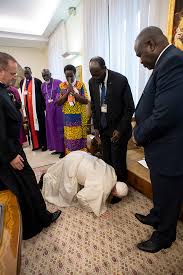
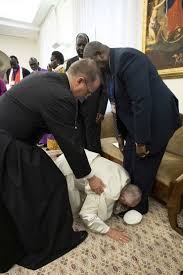
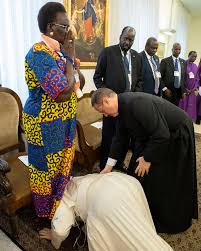
The international community must apply all available means of pressure to prevent a devastating return to conflict. Religious leaders have also long been involved in the South Sudan Peace Process for example when Pope Francis knelt down and kissed the feet of President Salva Kiir and Vice President Riek Machar. Countless Missionaries have also visited South Sudan and prayed for peace at the invitation of the government. The role of the Church is critical in the peace process in a predominantly Christian Country



God Bless you the reader and God bless South Sudan


Comments